
SMARTPHONES | Review | 2026
- Google Pixel 11 5G (Obsidian) Review 2026: Camera, Battery & Price in India
- Quick Verdict
- Key Specifications
- Design & Build Quality
- Display
- Performance
- Camera
- Daylight Camera
- Portrait Camera
- Night Photography
- Ultrawide Camera
- Selfie Camera
- Video Recording
- Software & Features
- Battery Life & Charging
- Connectivity
- Pros & Cons
- Price & Availability in India
- Competitors & Alternatives
- Who Should Buy the Google Pixel 11 5G?
- Who Should Skip It?
- Final Verdict — Is the Google Pixel 11 5G Worth Buying?
- Frequently Asked Questions
- Does the Google Pixel 11 5G support wireless charging?
- How many years of software updates does the Pixel 11 5G get?
- Is the storage on the Pixel 11 5G expandable?
- What colours is the Google Pixel 11 5G available in?
- Does the Pixel 11 5G support NavIC for India-specific GPS?
Google Pixel 11 5G (Obsidian) Review 2026: Camera, Battery & Price in India
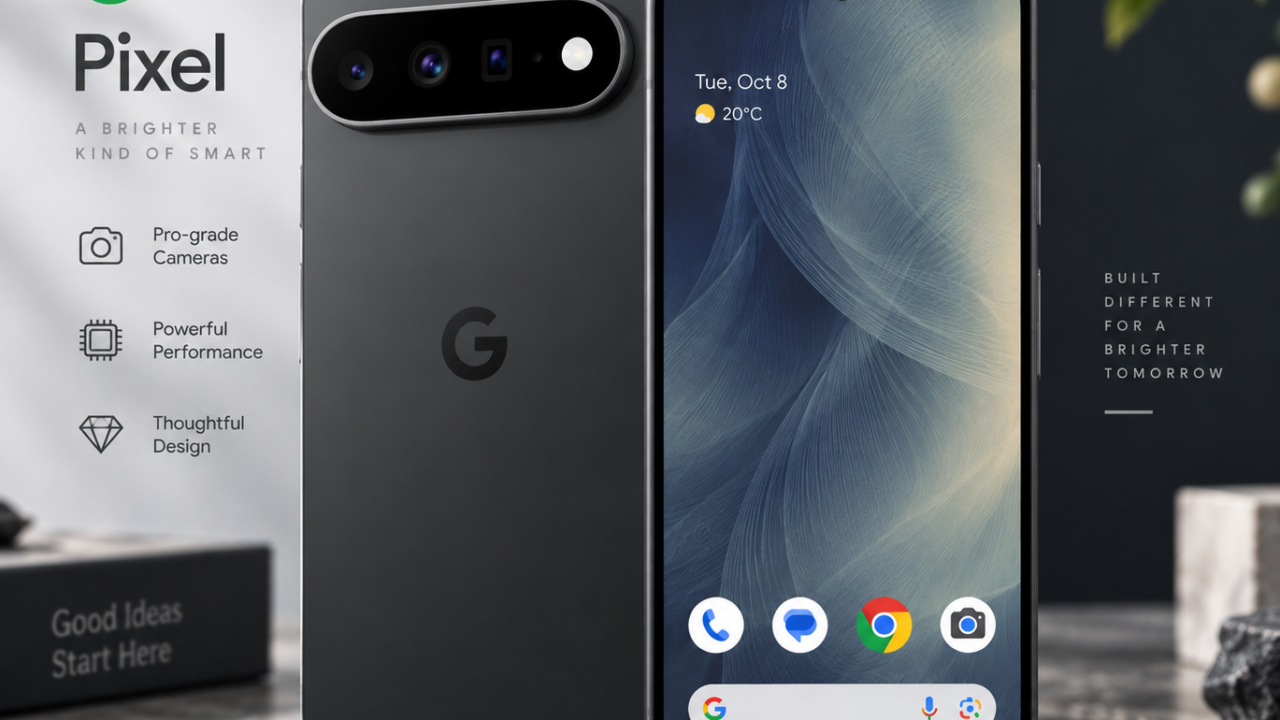
The Google Pixel 11 5G arrives as Google’s latest flagship for 2026, built around the new Tensor G6 chipset and continuing the Pixel series’ focus on computational photography and clean, Gemini-powered Android software. In the Obsidian colourway reviewed here, it presents a mature, understated design that leans on substance over flash.
According to the official specifications, the Pixel 11 pairs a 6.3-inch 120Hz LTPO OLED display with a 48MP triple camera system, a 4985mAh battery, and a promise of seven years of Android OS and security updates — a figure that remains unmatched anywhere else in the smartphone industry.
This review covers the Pixel 11’s design, display, everyday and camera performance, software experience, battery life, and India pricing, all based on the official specification sheet and manufacturer-published details, to help you decide whether it deserves a spot on your shortlist.
As with all DeviceMatrix reviews, performance expectations discussed here are based on the hardware configuration and official claims from Google, rather than independent lab testing of this specific unit.

Quick Verdict
Based on the official specifications, the Google Pixel 11 5G is a well-rounded flagship that leans on Google’s computational photography strength, a bright and smooth 120Hz LTPO OLED display, and best-in-class software longevity with seven years of guaranteed updates.
The Tensor G6 chipset, paired with the Titan M3 security coprocessor, is designed primarily for smooth everyday performance, AI-driven camera processing, and deep Gemini integration rather than chasing raw benchmark numbers, which is consistent with the Pixel series’ long-standing philosophy.
For buyers who prioritise camera quality, clean stock Android, and long-term software support over maximum gaming performance or the fastest charging speeds, the Pixel 11 5G in Obsidian looks like a compelling flagship choice for 2026.
It sits in a competitive price bracket in India, so its overall value will ultimately depend on how it’s priced and discounted relative to strong rivals like the Samsung Galaxy S26 series.
Key Specifications
According to Google’s official listing, the Pixel 11 5G is powered by the new 2nm Tensor G6 chipset alongside the Titan M3 security coprocessor, and comes with 12GB of RAM paired with either 256GB or 512GB of non-expandable UFS storage.
The table below summarises the core specifications relevant to this Obsidian colour variant, covering the processor, display, camera system, battery, and connectivity details as listed by the manufacturer.
| Specification | Details |
| Model | Google Pixel 11 5G (Obsidian) |
| Processor | Google Tensor G6 (2nm) with Titan M3 security coprocessor and next-gen TPU |
| RAM | 12GB |
| Storage | 256GB / 512GB UFS (non-expandable) |
| Display | 6.3-inch LTPO OLED (Actua), 120Hz refresh rate, up to 3000 nits peak brightness, Corning Gorilla Glass Victus 2 |
| Rear Camera | 48MP main (f/1.7) with Macro Focus + 13MP ultrawide (f/2.2) + 10.8MP telephoto (f/3.1, 5x optical zoom, up to 30x Super Res Zoom) |
| Front Camera | 10.5MP with autofocus |
| Battery | 4985mAh (typical capacity) |
| Charging | 30W wired USB-C PPS, Qi2.2 wireless (Pixelsnap up to 25W) |
| Operating System | Android 17 with Gemini Intelligence, 7 years of OS and security updates |
| Build | Gorilla Glass Victus 2 front and back, satin-finish aluminium frame, IP68 rated |
| Biometrics | In-display fingerprint sensor + face unlock via selfie camera |
| Connectivity | 5G (SA/NSA + mmWave), Wi-Fi 6E, Bluetooth 6.0, NFC, dual-frequency GPS/GLONASS/Galileo/NavIC |
| Dimensions & Weight | 152.8 x 72 x 8.6mm, 197 grams |
| Colours | Frost, Pistachio, Hibiscus, Obsidian |
Design & Build Quality
The Pixel 11 5G in Obsidian carries forward Google’s now-familiar Pixel design language, featuring a horizontal camera bar across the back that houses the triple rear camera system, flanked by a polished metal frame. According to Google, the back panel uses Corning Gorilla Glass Victus 2 with a satin finish, paired with a spacecraft-grade aluminium frame.

The device measures 152.8 x 72 x 8.6mm and weighs 197 grams according to the official specifications, keeping it firmly in line with other large-screen flagships while remaining manageable for single-handed use for most users.
Google also highlights sustainability credentials for this generation, stating that the aluminium housing uses 100% recycled content and that at least 33% of the product’s weight comes from recycled materials, along with fully plastic-free retail packaging.
An IP68 rating for dust and water resistance is included as standard, according to the manufacturer, which should give buyers reasonable confidence against accidental spills, rain, and brief submersion, though Google notes that resistance may diminish over time with wear and repairs.
Display
The Pixel 11 5G features a 6.3-inch LTPO OLED display, branded by Google as an Actua display, with support for a 120Hz refresh rate for smooth scrolling and animations across the Android 17 interface.
According to the official specifications, the panel can reach up to 3000 nits of peak brightness, which on paper should make outdoor visibility excellent even under harsh direct sunlight — a meaningful improvement area Google has pushed across recent Pixel generations.
The front glass is protected by Corning Gorilla Glass Victus 2, the same scratch-resistant glass used on the rear panel, giving the display strong protection against everyday scuffs and minor drops based on the glass manufacturer’s stated durability standards.
The LTPO panel technology also allows the display to dynamically adjust its refresh rate depending on on-screen content, which should help balance smooth visuals with battery efficiency during lighter tasks like reading or standby.
Performance
At the heart of the Pixel 11 5G is Google’s new Tensor G6 chipset, built on a 2nm process according to the official specifications, working alongside the Titan M3 security coprocessor and a next-generation TPU dedicated to on-device AI processing.
With 12GB of RAM, the device should handle everyday multitasking, app switching, and Android 17’s Gemini-powered features smoothly, based on the hardware configuration. The Tensor series has traditionally prioritised AI and camera processing capability over raw CPU benchmark scores, and the G6 continues that design philosophy.
Storage comes in 256GB or 512GB UFS configurations, with the 512GB variant reportedly using Zoned UFS for faster read and write performance, according to carrier-published specifications. Neither storage tier is expandable via microSD, which is standard for the Pixel lineup.
For everyday use — browsing, social media, streaming, and moderate gaming — the Tensor G6 should feel responsive and capable. However, buyers specifically chasing maximum sustained gaming performance in the most demanding titles may find Snapdragon-powered flagship rivals better suited to that particular use case, based on general architecture positioning.
Camera
The Pixel 11 5G’s rear camera system consists of a 48MP main sensor with an f/1.7 aperture and Macro Focus support, a 13MP ultrawide lens with an f/2.2 aperture, and a 10.8MP telephoto lens with an f/3.1 aperture offering 5x optical zoom, according to the official specifications.
Google states the system supports Super Res Zoom up to 30x, with claimed optical-quality results at 0.6x, 1x, 2x, 5x, and 10x zoom levels, leaning heavily on the company’s computational photography pipeline to extend beyond the physical optical zoom range.
Daylight Camera
In good lighting, the 48MP main sensor combined with Google’s long-standing computational photography processing is expected to deliver sharp, well-balanced daylight shots with accurate colour science, an area where Pixel phones have consistently been strong performers according to industry-wide camera reputation.
Portrait Camera
Portrait mode on the Pixel series typically leans on software-driven depth mapping rather than pure optical bokeh, and the Pixel 11 should continue that approach, using the Tensor G6’s AI processing for accurate edge detection and natural-looking background blur, based on the chipset’s stated AI capabilities.
Night Photography
Night Sight has historically been one of the Pixel series’ standout features, and with the 48MP f/1.7 main sensor and Tensor G6’s dedicated AI processing, expected low-light performance should remain a core strength of the Pixel 11 5G, based on the hardware and Google’s continued investment in this feature.
Ultrawide Camera
The 13MP ultrawide lens with an f/2.2 aperture is expected to handle landscape and group shots reasonably well, though ultrawide sensors on most flagships, including this one, typically show a step down in detail and low-light performance compared to the primary sensor.
Selfie Camera
The front-facing 10.5MP camera includes autofocus, according to the official specifications, which should help maintain sharp focus for both solo selfies and group shots, along with face-unlock functionality for device security.
Video Recording
Google’s official audio specifications list stereo recording, speech enhancement, wind noise reduction, and audio zoom for video capture, suggesting a strong focus on both visual and audio quality during video recording, though exact maximum resolution and frame rate details should be confirmed on the official listing before purchase.
Software & Features
The Pixel 11 5G ships with Android 17 and Google’s Gemini Intelligence suite built in, including Gemini Nano for on-device AI tasks, Gemini Live for conversational AI interaction, Circle to Search, and Live Translate, according to the official feature list.
Perhaps the standout software commitment is Google’s promise of seven years of major Android OS upgrades and security updates, starting from Android 17. This is currently the longest software support commitment in the smartphone industry and should meaningfully extend the phone’s practical usable lifespan.
Call Assist, part of Google’s AI feature suite, is also included, aimed at helping manage and screen calls more intelligently — a feature that builds on the call-screening capabilities Pixel phones have offered for several generations.
Battery Life & Charging
The Pixel 11 5G packs a 4985mAh battery (typical capacity), according to the official specifications, which should comfortably support a full day of moderate-to-heavy use for most buyers, including social media, camera use, and 5G connectivity.
Charging is rated at 30W over wired USB-C with PPS support, which is respectable but not class-leading compared to some rivals offering 65W or faster wired charging. Wireless charging is supported via Qi2.2, branded by Google as Pixelsnap, with speeds of up to 25W using compatible magnetic chargers.
Real-world battery performance will still depend heavily on individual usage patterns, including 5G data use, screen brightness at the display’s higher 3000-nit range, camera usage, and background app activity, so actual endurance may vary from one user to another.
Connectivity
According to the official specifications, the Pixel 11 5G supports comprehensive SA/NSA sub-6GHz and mmWave 5G bands tailored for Indian telecom operators, meaning it should work reliably across both Jio and Airtel 5G networks.
The device also includes Wi-Fi 6E support for tri-band 2.4GHz, 5GHz, and 6GHz networks, Bluetooth 6.0 with high-resolution audio codec support, NFC for tap-and-pay transactions, and dual-frequency GPS with GLONASS, Galileo, and NavIC support for accurate location tracking, including India’s own NavIC satellite system.
Pros & Cons
|
✅ Pros
|
❌ Cons
|
Price & Availability in India
The Google Pixel 11 5G was launched in India at ₹89,999 for the 12GB + 256GB variant, with the 12GB + 512GB configuration priced at ₹1,04,999, according to official launch pricing reported at the time of release.
It is available in Frost, Pistachio, Hibiscus, and Obsidian colour options through the Google Store, Flipkart, Amazon, and other authorised retail partners in India, with periodic bank card discounts and no-cost EMI options offered during launch and sale periods.
Competitors & Alternatives
Within its price segment, the Pixel 11 5G competes directly with the Samsung Galaxy S26 series, which offers stronger raw performance benchmarks but a different software philosophy compared to Google’s stock Android and Gemini-first approach.
For buyers who find the Pixel 11’s price steep, Google’s own ecosystem and camera strengths can also be experienced, in a more value-focused form, by looking at capable mid-range 5G phones.
📄 Also Read: Vivo S2 5G Review 2026: India Price & Specs — Wondering how a flagship Pixel compares to a value-focused mid-ranger? See what the Vivo S2 5G brings to the table at a fraction of the price.
Buyers should weigh what matters most to them — the Pixel 11 leans heavily on camera processing, clean software, and long-term update support, while rivals in this bracket may offer faster charging or higher peak gaming performance instead.
Who Should Buy the Google Pixel 11 5G?
This phone is well suited to buyers who prioritise camera quality above all else, particularly those who value Google’s computational photography strength in daylight, portrait, and low-light shooting scenarios.
It also makes strong sense for buyers who want the longest possible software support window, since seven years of OS and security updates significantly extends the phone’s usable lifespan compared to most Android rivals.
Fans of clean, near-stock Android with deep Gemini AI integration, including Gemini Live and Circle to Search, will likely find the Pixel 11 5G’s software experience more appealing than heavily skinned Android alternatives.
Who Should Skip It?
Buyers chasing maximum sustained gaming performance or the highest raw benchmark scores may find Snapdragon-powered flagship rivals a better fit, since the Tensor G6 is tuned primarily for AI and camera processing rather than peak gaming throughput.
Those who prioritise the fastest possible wired charging speeds should also look elsewhere, as the Pixel 11’s 30W charging is noticeably behind the 65W-100W charging offered by several competing flagships at a similar price.
Buyers wanting a true periscope telephoto lens for maximum zoom quality should consider the Pixel 11 Pro instead, since the standard Pixel 11 relies more heavily on digital Super Res Zoom beyond its 5x optical range.
Final Verdict — Is the Google Pixel 11 5G Worth Buying?
Based on the official specifications, the Google Pixel 11 5G in Obsidian delivers a strong, well-rounded flagship package built on Google’s core strengths — computational photography, clean Gemini-powered software, and an industry-leading seven-year update commitment.
For buyers who value those specific strengths over raw gaming benchmarks or the fastest charging speeds, this phone should represent a genuinely satisfying long-term purchase, provided it’s picked up at a competitive India price.
Our Rating
8.6 / 10
A well-rounded flagship built on clean software and computational photography
🛒 Buy Google Pixel 11 5G on Amazon
Also check official specs at Google India Official Website
Frequently Asked Questions
Does the Google Pixel 11 5G support wireless charging?
Yes, it supports Qi2.2 wireless charging, branded as Pixelsnap, at speeds up to 25W, along with 30W wired USB-C charging.
How many years of software updates does the Pixel 11 5G get?
According to Google, the Pixel 11 5G is guaranteed seven years of major Android OS upgrades and security updates from its original release.
Is the storage on the Pixel 11 5G expandable?
No, the 256GB and 512GB storage options are UFS-based and non-expandable, with no microSD card support.
What colours is the Google Pixel 11 5G available in?
It is available in Frost, Pistachio, Hibiscus, and Obsidian, according to the official colour lineup.
Does the Pixel 11 5G support NavIC for India-specific GPS?
Yes, alongside GPS, GLONASS, and Galileo, the device supports India’s NavIC satellite navigation system, according to the official specifications.
Affiliate Disclosure: This post contains affiliate links. If you purchase through these links, we may earn a small commission at no extra cost to you.
Content Disclosure: This content was produced with AI assistance and human review to ensure accuracy, fairness, and helpfulness for our readers.