
SMARTPHONE | Review | 2026
REDMI Turbo 5 Review: 7540mAh Battery, Dimensity 8500 Ultra & IP69K | 2026
The REDMI Turbo 5 has officially arrived in India, marking the debut of the Turbo series in the country and bringing flagship-grade performance to the upper mid-range segment. Launched on June 16, 2026, this smartphone is positioned as REDMI’s fastest handset yet, packing a MediaTek Dimensity 8500 Ultra chipset, a massive 7,540mAh battery, and a 120Hz AMOLED display — all starting at an aggressive price point of ₹37,999.
With its IP66/IP68/IP69/IP69K ruggedness ratings, 100W HyperCharge support, and a 50MP Sony IMX882 camera with OIS, the Turbo 5 aims to disrupt the ₹35,000–₹45,000 segment currently dominated by iQOO and OnePlus. In this review, we break down every aspect of the REDMI Turbo 5 based on official specifications and manufacturer claims to help you decide if this is your next smartphone in 2026.

Design & Build
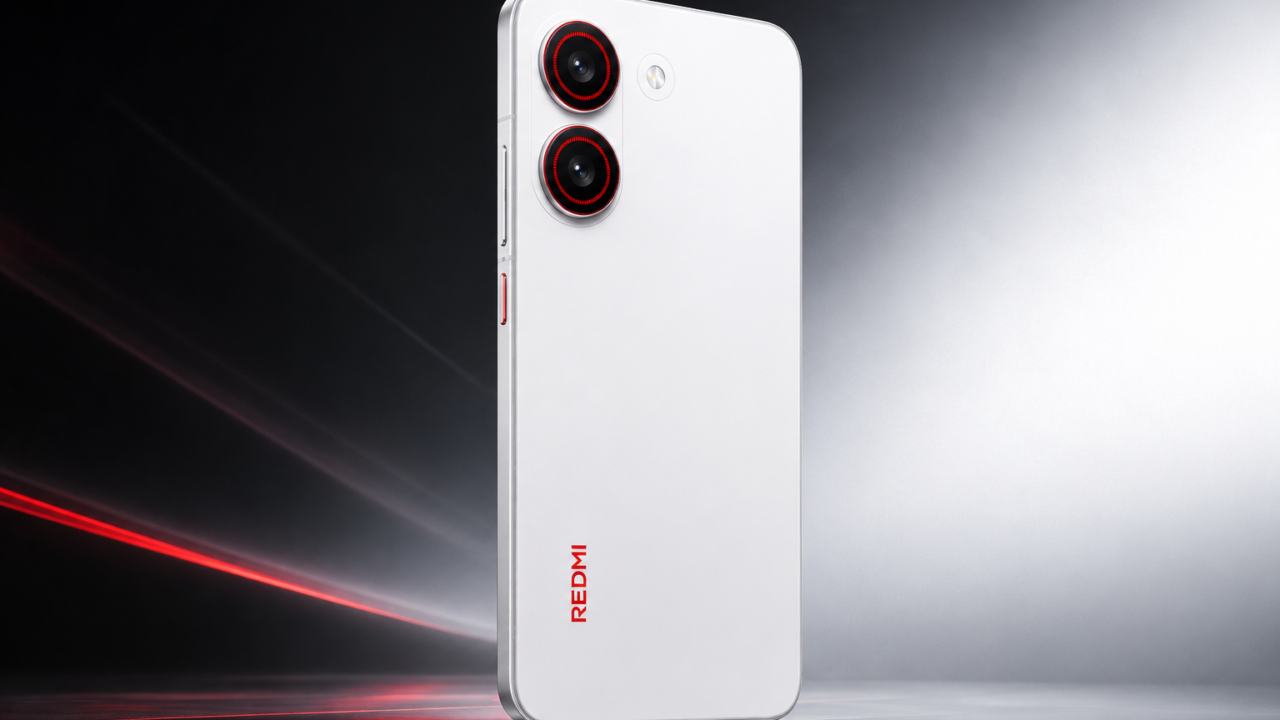
The REDMI Turbo 5 features a flat-sided aluminum frame with a glass front, giving it a modern, flagship-like aesthetic. According to the manufacturer, the device measures 157.53 x 75.19 x 8.18mm and weighs 204 grams — slightly hefty, but justified by the enormous battery inside.
One of the standout design elements is the customizable multi-color accent LED pixel matrix rings around the dual camera lenses on the rear. These rings pulse for notifications, charging status, gaming milestones, and media playback when the phone is placed face down. The phone is available in three colours: Asphalt Black, Nitro Blue, and Turbo White.
On the durability front, the Turbo 5 is one of the toughest mid-rangers on paper. It carries IP66, IP68, IP69, and IP69K ratings, meaning it can survive high-pressure hot water jets, dust ingress, and full submersion up to 1.5 meters for 30 minutes. The company claims this makes it suitable for outdoor enthusiasts and users in harsh environments.

Display
The REDMI Turbo 5 sports a 6.59-inch 1.5K AMOLED display with a resolution of 1268 x 2756 pixels and a pixel density of approximately 460 ppi. According to official specifications, the panel supports a 120Hz refresh rate, 480Hz touch sampling rate, and an instant touch sampling rate of up to 2560Hz for competitive gaming scenarios.
Brightness is a major highlight on paper. The display reaches a peak brightness of 3,500 nits with 25% APL, making it easily readable under direct sunlight. HDR support includes HDR10+, HDR Vivid, and Dolby Vision, while the DCI-P3 wide colour gamut ensures vibrant and accurate colours for media consumption.
For eye comfort, the company claims the display features 3840Hz PWM dimming combined with DC dimming to reduce flicker at low brightness levels. The screen is protected by Corning Gorilla Glass 7i, and Wet Touch 2.0 technology is included for improved responsiveness when the screen or fingers are wet.
Performance

Under the hood, the REDMI Turbo 5 is powered by the MediaTek Dimensity 8500 Ultra chipset built on a 4nm process. The octa-core CPU configuration includes one 3.4 GHz Cortex-A725 core, three 3.2 GHz Cortex-A725 cores, and four 2.2 GHz Cortex-A725 cores. The Mali-G720 MC8 GPU handles graphics, while the NPU 880 enables on-device AI processing.
Based on the hardware configuration, the Turbo 5 is expected to deliver flagship-level performance in its segment. The device is available with up to 16GB of LPDDR5X RAM and up to 512GB of UFS 4.1 storage. An additional 8GB of virtual RAM can be allocated from storage for improved multitasking. On paper, benchmark scores of around 2.4 million on AnTuTu v11 place it firmly in the upper mid-range performance tier.
For sustained performance, the manufacturer claims an advanced 5,300mm² 3D ice-loop cooling system with stainless steel LHP and graphite layers. This is expected to keep thermals in check during extended gaming sessions. The company also advertises 120fps gaming support on demanding titles, though real-world results will depend on game optimization.
The phone runs Xiaomi HyperOS 3 based on Android 16 out of the box. According to the manufacturer, the Turbo 5 is eligible for 4 years of major Android OS upgrades and 6 years of security patches — a solid software commitment for a mid-range device in 2026.
Camera

The REDMI Turbo 5 features a dual rear camera setup led by a 50MP Sony IMX882 primary sensor with an f/1.5 aperture, 1/1.95″ sensor size, and 1.6μm 4-in-1 large pixels. The main camera includes Optical Image Stabilization (OIS) and is paired with an 8MP ultra-wide camera offering a 112° field of view and f/2.2 aperture.
On paper, the camera hardware is capable. The primary sensor supports 4K video recording at 60fps with both OIS and EIS for stabilized footage. Slow-motion recording is available at up to 960fps in 720p and 1080p resolutions. The front-facing 20MP camera with f/2.2 aperture handles selfies and 1080p video calls.
However, early reports suggest that camera processing software may not be fully optimized, which could affect low-light performance and dynamic range compared to rivals with more mature image processing pipelines. The absence of a dedicated telephoto lens also means zoom shots will rely on digital cropping from the main sensor.
Battery
Battery life is arguably the biggest selling point of the REDMI Turbo 5. The device packs a massive 7,540mAh silicon-carbon battery — the largest ever in a REDMI smartphone, according to the manufacturer. On paper, this capacity is expected to deliver two full days of heavy use or even longer with moderate usage patterns.
Charging speeds are equally impressive. The Turbo 5 supports 100W HyperCharge wired fast charging, which the company claims can replenish the battery to 51% in approximately 30 minutes. A full charge is expected to take under an hour. The device also supports 27W reverse wired charging, allowing it to act as a power bank for other devices.
For battery longevity, the manufacturer has included G1 and P3 power management chips alongside Battery Health Management 2.0. Night Intelligent Charging 2.0 and battery aging prediction features are also present to preserve long-term battery health over the device’s lifespan.
Full Specifications
| Specification | Details |
| Display | 6.59″ AMOLED, 1268 x 2756 px, 120Hz, 460 ppi, 3500 nits peak, Gorilla Glass 7i |
| Processor | MediaTek Dimensity 8500 Ultra (4nm), Octa-core up to 3.4 GHz |
| GPU | Mali-G720 MC8 |
| RAM | 8GB / 12GB / 16GB LPDDR5X + up to 8GB virtual RAM |
| Storage | 256GB / 512GB UFS 4.1 (non-expandable) |
| Rear Camera | 50MP Sony IMX882 (f/1.5, OIS) + 8MP Ultra-Wide (f/2.2, 112° FoV) |
| Front Camera | 20MP (f/2.2), 1080p video |
| Battery | 7540mAh Si/C Li-Ion, 100W HyperCharge, 27W reverse charging |
| OS | Android 16 with HyperOS 3 (4 years OS + 6 years security updates) |
| Connectivity | 5G, Wi-Fi 6, Bluetooth 6.0, NFC, USB Type-C 2.0, IR Blaster, GPS (L1+L5) |
| IP Rating | IP66 / IP68 / IP69 / IP69K |
| Dimensions | 157.53 x 75.19 x 8.18 mm |
| Weight | 204 grams |
| Colours | Asphalt Black, Nitro Blue, Turbo White |
| India Price | ₹37,999 (8GB+256GB) | ₹40,999 (12GB+256GB) |
Pros & Cons
|
✅ Pros
|
❌ Cons
|
Who Should Buy
The REDMI Turbo 5 is best suited for power users and mobile gamers who prioritize raw performance and battery endurance over camera versatility. If you are someone who plays graphics-intensive games for hours, streams content daily, or simply hates charging your phone every night, the 7,540mAh battery and Dimensity 8500 Ultra chipset make this a compelling choice.
Outdoor professionals and adventure enthusiasts will also appreciate the IP69K rating, which is rare in this price segment. The rugged build means you do not need a case for basic water and dust protection, though a case is still recommended for drop protection.
However, photography enthusiasts who value zoom capabilities and advanced computational photography may want to look at alternatives. The dual-camera setup is functional but lacks the versatility of triple or quad-camera arrays found on some competitors. If camera is your top priority, devices like the iQOO Z11 or Samsung Galaxy A96 might offer better imaging pipelines.
📄 Also Read: iQOO Z11 5G India Launch — Check out iQOO’s latest performance-focused 5G smartphone and how it compares to the REDMI Turbo 5 in the upper mid-range segment.
Final Verdict
The REDMI Turbo 5 is a bold entry into India’s competitive upper mid-range market. Based on official specifications, it delivers where it matters most: performance, battery life, and durability. The MediaTek Dimensity 8500 Ultra is a capable chipset that should handle anything from daily multitasking to high-frame-rate gaming, while the 7,540mAh battery sets a new standard for endurance in this category.
The display is another strong point, with class-leading brightness and smooth 120Hz refresh rates that make scrolling and gaming feel responsive. The IP69K rating is genuinely impressive and gives the Turbo 5 a durability edge over most rivals priced under ₹40,000.
That said, the camera system is the primary area where the Turbo 5 shows its mid-range roots. While the 50MP Sony sensor is solid hardware, the lack of a telephoto lens and reports of unoptimized image processing software mean it may not satisfy users who prioritize photography. The absence of expandable storage and a 3.5mm jack are also notable omissions.
At ₹37,999, the REDMI Turbo 5 offers exceptional value for gamers, power users, and anyone who wants a phone that lasts two days on a single charge. It is not a perfect all-rounder, but it excels in the areas that matter most to its target audience. If battery and performance are your top priorities in 2026, the Turbo 5 deserves serious consideration.
Our Rating
8.4 / 10
A performance and battery beast with flagship durability
🔗 Visit Official REDMI Turbo 5 Product Page
Affiliate Disclosure: This post contains affiliate links. If you purchase through these links, we may earn a small commission at no extra cost to you.
Content Disclosure: This content was produced with AI assistance and human review to ensure accuracy, fairness, and helpfulness for our readers.