
BUDGET SMARTPHONES | Comparison | 2026
OnePlus N6 vs Redmi Turbo 5 (2026) — Best Budget Phone Under ₹40,000?
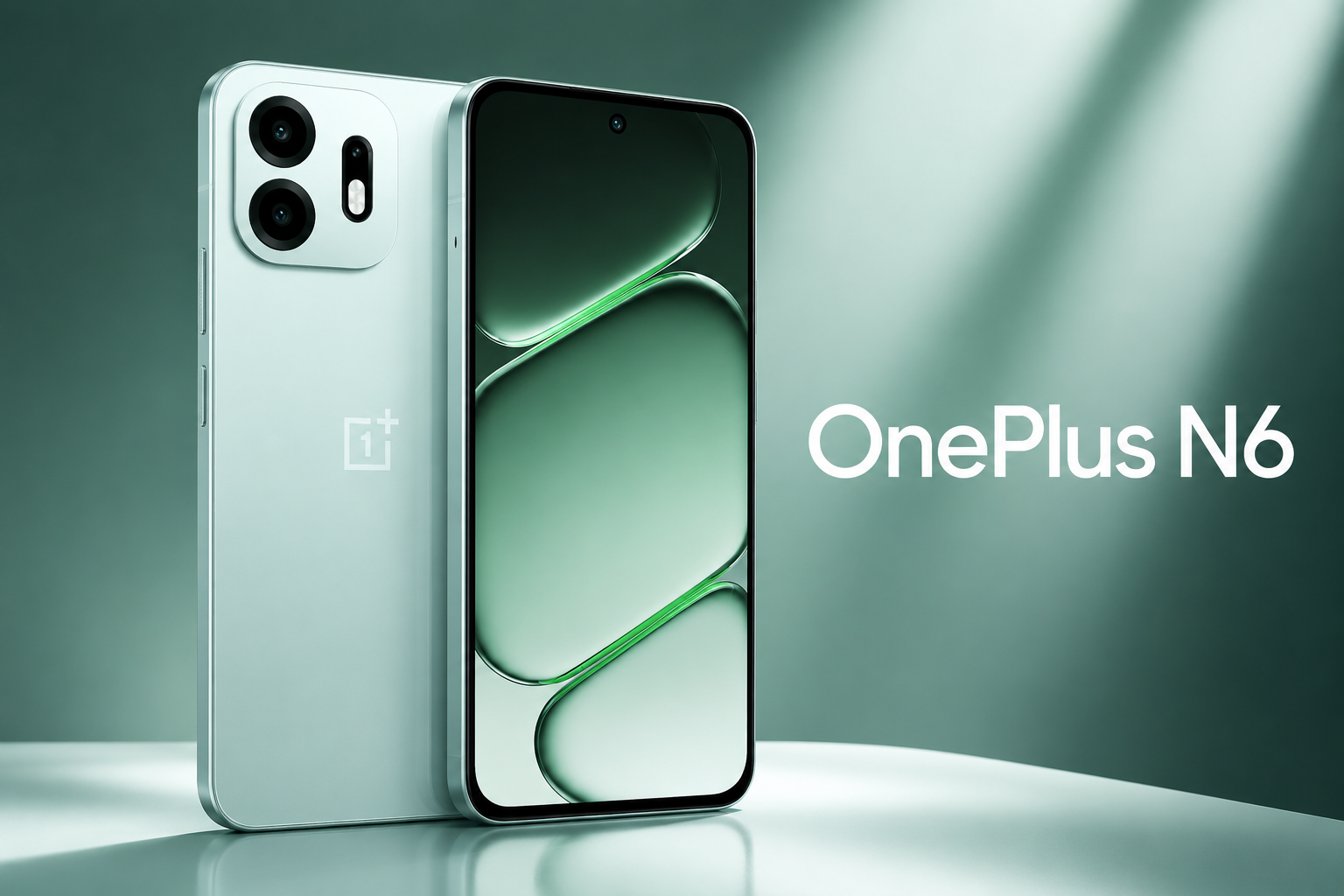
OnePlus N6 vs Redmi Turbo 5 — two of the most talked-about budget smartphones in India for 2026, each carving a distinct identity in the fiercely competitive sub-₹40,000 segment. The OnePlus N6 enters as a battery-first disruptor with an unprecedented 8000mAh cell and a price tag starting at ₹21,999, while the Redmi Turbo 5 positions itself as a performance powerhouse armed with the MediaTek Dimensity 8500 Ultra, a 1.5K AMOLED display, and 100W HyperCharge at ₹37,999.
This comparison matters because both phones target value-conscious Indian buyers, yet they approach the budget formula from opposite ends. According to official specifications, the OnePlus N6 sacrifices display resolution and raw processing power to deliver marathon battery life and military-grade durability, whereas the Redmi Turbo 5 prioritizes flagship-grade performance, premium build materials, and cutting-edge charging speeds. On paper, the price gap of nearly ₹16,000 separates these devices, but the real decision hinges on whether you need a reliable daily driver or a gaming-centric performance machine.
 |
 |
| 🛒 Buy OnePlus N6 | 🛒 Buy Redmi Turbo 5 |
OnePlus N6 vs Redmi Turbo 5 — Quick Specs Comparison
| Specification | OnePlus N6 | Redmi Turbo 5 |
| Launch Price (India) | ₹21,999 (4GB+128GB) ✓ | ₹37,999 (8GB+256GB) |
| Processor | MediaTek Dimensity 6360 Apex (6nm) | MediaTek Dimensity 8500 Ultra (4nm) ✓ |
| Display | 6.8″ HD+ LCD, 120Hz, 1200 nits | 6.59″ 1.5K AMOLED, 120Hz, 3500 nits ✓ |
| RAM | 4GB / 6GB LPDDR4X | 8GB / 12GB LPDDR5X Ultra ✓ |
| Storage | 128GB UFS 2.0 (expandable via microSD) | 256GB UFS 4.1 (non-expandable) ✓ |
| Rear Camera | 50MP (f/1.8, Sony IMX852) + 2MP | 50MP (f/1.59, Sony LYT-600, OIS) + 8MP UW ✓ |
| Front Camera | 8MP (f/2.0) | 20MP (f/2.0) ✓ |
| Battery | 8000mAh Silicon Carbon ✓ | 7540mAh Si/C Li-Ion |
| Charging | 45W SUPERVOOC (0-50% in 47 min) | 100W HyperCharge (20-100% in 51 min) ✓ |
| Build | Plastic back, metal frame, Armorshell Glass | Glass front + back, aluminum frame ✓ |
| IP Rating | IP65 | IP68/IP69K ✓ |
| Durability | MIL-STD-810H | MIL-STD-810H + IP69K high-pressure jets ✓ |
| Weight | 224g | 204g ✓ |
| OS | OxygenOS 16 (Android 16), 2 OS updates | HyperOS 3 (Android 16), 4 OS upgrades ✓ |
| AnTuTu Score | ~5,31,619 | ~21,35,669 ✓ |
| 5G Bands | 7 bands (n1, n5, n8, n28, n41, n77, n78) | 16 bands (SA/NSA/Sub6) ✓ |
| Audio | Single speaker | Stereo speakers + Dolby Atmos ✓ |
Design & Build Quality
 |
 |
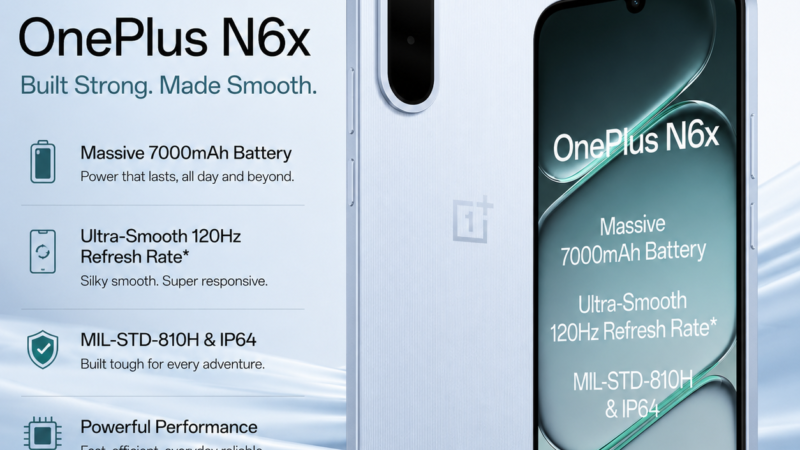
The OnePlus N6 adopts a pragmatic design philosophy that prioritizes durability over premium aesthetics. According to official specifications, the device measures 166.47 × 78.23 × 8.88 mm and weighs 224 grams — substantial for a budget phone, largely due to the massive 8000mAh battery inside. The front is protected by Armorshell Glass, while the back panel is plastic with a metal frame. The manufacturer claims MIL-STD-810H military-grade durability certification across 21 test categories, alongside an IP65 rating for dust and water resistance. Two color options are available: Midnight Green and Fresh Mint, both featuring a flat-edged design with a square camera module that houses the dual rear sensors.
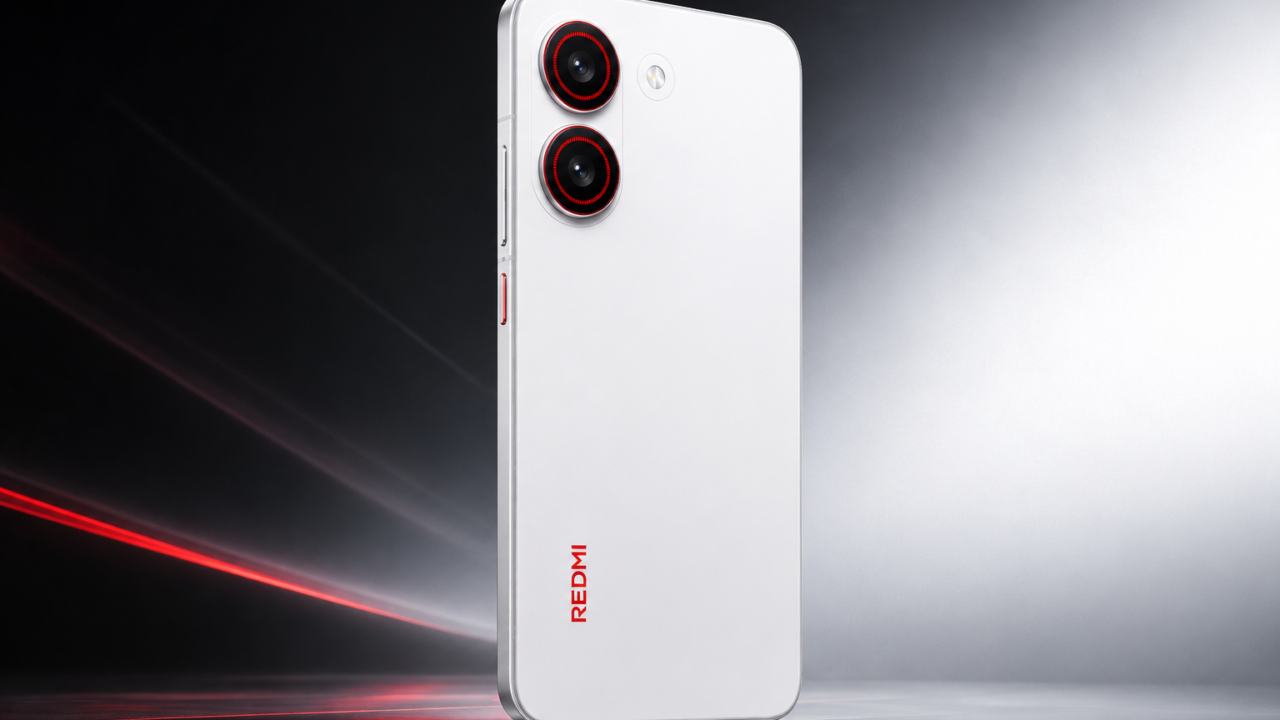
The Redmi Turbo 5 elevates the budget segment with genuinely premium materials. Per official claims, the chassis measures 157.5 × 75.2 × 8.2 mm and weighs 204 grams — surprisingly compact and lighter than the OnePlus despite housing a 7540mAh battery. The glass front and back panels are joined by an aluminum frame, delivering a flagship-tier in-hand feel. The IP68/IP69K certification is class-leading for this price bracket, offering submersion resistance up to 1.5 meters for 30 minutes plus protection against high-pressure water jets. The matte finish resists fingerprints effectively, and the customizable Pixel Matrix lighting system on the rear adds a distinctive visual character.
Advantage — Design: The Redmi Turbo 5 wins decisively with its glass-and-aluminum construction, superior IP68/IP69K rating, and lighter weight. The OnePlus N6 compensates with its Armorshell Glass and MIL-STD-810H certification, but the plastic back and heavier chassis place it a tier below in perceived quality.
Display Comparison
The display is where the price gap between these two phones becomes most apparent. The OnePlus N6 features a 6.8-inch HD+ LCD panel with a resolution of 720 × 1570 pixels, resulting in a pixel density of just 254 ppi. On paper, this is the most significant compromise in the entire device. The manufacturer claims a 120Hz refresh rate and 1200 nits peak brightness in High Brightness Mode, which is respectable for an LCD, but the low resolution is immediately noticeable when viewing text, images, or streaming content. The 90.4% screen-to-body ratio with a punch-hole cutout is modern, yet the 8-bit color depth and SDR-only playback limit visual fidelity.
The Redmi Turbo 5 delivers a flagship-grade viewing experience with its 6.59-inch 1.5K AMOLED display. According to official specifications, the panel offers a resolution of 1268 × 2756 pixels at 460 ppi — nearly double the pixel density of the OnePlus. The 120Hz refresh rate is complemented by 3840Hz PWM dimming for eye comfort, Dolby Vision, HDR10+, and an astonishing 3500 nits peak brightness. The 68 billion colors, in-display optical fingerprint scanner, and slim bezels create an immersive experience that rivals phones costing twice the price. For HDR content on streaming platforms, the visual difference is night and day.
Advantage — Display: The Redmi Turbo 5 is the overwhelming winner. The 1.5K AMOLED panel with HDR support, 3500 nits brightness, and 3840Hz PWM dimming outclasses the OnePlus N6’s HD+ LCD in every measurable parameter. The OnePlus display is serviceable for basic tasks but falls short for media consumption and gaming.
Performance — Dimensity 6360 Apex vs Dimensity 8500 Ultra
Based on the hardware configuration, the performance gap between these two devices is staggering. The OnePlus N6 is powered by the MediaTek Dimensity 6360 Apex, a 6nm octa-core chip with 2× 2.4 GHz Cortex-A76 and 6× 2.0 GHz Cortex-A55 cores, paired with a Mali-G57 MC2 GPU. According to published benchmark data, the device scores approximately 5,31,619 on AnTuTu and 783 on Geekbench 6 single-core. The base configuration offers 4GB LPDDR4X RAM and 128GB UFS 2.0 storage, with a 6GB variant available at ₹24,999. A dedicated microSD slot supports expansion up to 2TB, which partially offsets the modest internal storage.
The Redmi Turbo 5 deploys the MediaTek Dimensity 8500 Ultra, a flagship-tier 4nm processor with a unified Cortex-A725 architecture running at up to 3.4 GHz, paired with a Mali-G720 MC8 GPU. Per official claims, the chip achieves an AnTuTu score of 21,35,669 — roughly 4× higher than the OnePlus. The base model includes 8GB LPDDR5X Ultra RAM and 256GB UFS 4.1 storage, with a 12GB variant at ₹40,999. The advanced cooling system sustains 120fps gameplay in BGMI and COD: Mobile, though some warmth is noticeable around the camera module during extended sessions. The 4-year OS upgrade promise and 6-year security update commitment further extend the device’s longevity.
Advantage — Performance: The Redmi Turbo 5 wins by a landslide. The Dimensity 8500 Ultra, LPDDR5X RAM, and UFS 4.1 storage create a performance trifecta that the OnePlus N6 cannot approach. The OnePlus is adequate for everyday tasks and light gaming but struggles with graphically intensive titles and heavy multitasking.
Battery Life & Connectivity
The OnePlus N6’s headline feature is its 8000mAh Silicon Carbon battery — the largest in its segment and a genuine game-changer for users who prioritize endurance over everything else. According to the manufacturer, the device delivers up to 3 days of power on a single charge under normal usage, and independent benchmarks confirm over 19 hours of continuous video playback. The 45W SUPERVOOC charger takes the battery from 1% to 50% in approximately 47 minutes, while a 5-minute top-up provides 1.7 hours of YouTube playback. Bypass charging functionality routes power directly to the hardware during gaming, reducing thermal buildup. However, the 5W reverse wired charging is modest, and there is no wireless charging support.
The Redmi Turbo 5 houses a 7540mAh Si/C Li-Ion battery that, while smaller than the OnePlus, still delivers excellent endurance. The manufacturer claims a full day of heavy use, and PC Mark battery tests register 16 hours of continuous use. The standout feature is the 100W HyperCharge, which takes the battery from 20% to 100% in just 51 minutes — effectively matching the OnePlus’s 45W speed despite the smaller battery. The 27W reverse wired charging is significantly more useful than the OnePlus’s 5W offering. Connectivity is equally superior: Wi-Fi 6/6E, Bluetooth 5.4, NFC, IR blaster, and comprehensive 5G band coverage (16 bands including SA/NSA/Sub6) ensure compatibility with all Indian networks and future-proofing for emerging bands.
Advantage — Battery: The OnePlus N6 wins for absolute endurance with its 8000mAh cell delivering up to 3 days of use. Advantage — Charging: The Redmi Turbo 5 takes the lead with 100W HyperCharge and 27W reverse charging. Advantage — Connectivity: The Redmi Turbo 5 is decisively superior with Wi-Fi 6E, NFC, IR blaster, and 16 5G bands versus the OnePlus’s more basic Wi-Fi 6 and 7-band 5G setup.
Final Verdict — Which Should You Buy?
|
🏆 Buy OnePlus N6 If
|
📋 Buy Redmi Turbo 5 If
|
For the Indian buyer in 2026, the OnePlus N6 is a specialist device that excels in one area above all others: battery endurance. The 8000mAh cell is genuinely unprecedented at ₹21,999, and for users who travel frequently, work in remote areas, or simply hate charging their phone daily, this is a compelling proposition. However, the HD+ display, modest processor, and 4GB RAM are compromises that become apparent quickly when multitasking or consuming media. The manufacturer claims a 60-month smooth experience for the 6GB variant, but the base 4GB model is already stretched thin for 2026 standards.
The Redmi Turbo 5, at ₹37,999, is a different class of device entirely. It delivers performance, display quality, build materials, and charging speeds that would not look out of place on a ₹60,000 flagship. The Dimensity 8500 Ultra handles everything from 120fps gaming to AI-enhanced photography with ease, while the 1.5K AMOLED display is a joy for streaming and reading. The 4-year OS upgrade promise ensures the phone remains secure and feature-rich through 2030. For buyers who can stretch their budget, the Redmi Turbo 5 offers a fundamentally superior smartphone experience that justifies every rupee of the premium.
|
OnePlus N6 7.2 / 10 Best Battery Champion |
Redmi Turbo 5 8.6 / 10 Best Performance All-Rounder |
| 🛒 Buy OnePlus N6 | 🛒 Buy Redmi Turbo 5 |
📄 Also Read: OnePlus N6 vs POCO F7 5G Comparison — How the N6 stacks against another budget performance contender.
📄 Also Read: Top 10 Laptops for Engineering Students in 2026 — Complete buying guide with detailed reviews.
Affiliate Disclosure: This post contains affiliate links. If you purchase through these links, we may earn a small commission at no extra cost to you.
Content Disclosure: This content was produced with AI assistance and human review to ensure accuracy, fairness, and helpfulness for our readers.